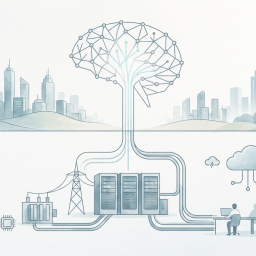

Artificial Intelligence is often presented as the next technological layer to be integrated into transportation systems. In reality, AI is not simply another digital tool added to existing infrastructures; it is progressively redefining how transport networks are designed, operated, secured and governed. The transport sector, which is historically dependent on heavy infrastructure, fragmented data, and operational complexity, is entering a phase where competitive advantage increasingly depends on the ability to transform data into operational intelligence.
For decades, transport innovation focused primarily on physical assets: faster trains, larger airports, autonomous vehicles, electrification or infrastructure expansion. While these dimensions remain critical, the strategic center of gravity is shifting toward software orchestration, predictive systems and real-time decision-making capabilities. The real disruption introduced by AI is therefore less about automation itself than about the emergence of intelligent operational ecosystems.
This transformation is occurring at a moment of exceptional pressure on transport systems worldwide. Urban congestion continues to rise. Supply chains remain vulnerable to geopolitical tensions and climate disruptions. Public transport operators face structural budget constraints while simultaneously being asked to decarbonize fleets and improve service quality. Logistics operators must absorb increasing volatility in demand while reducing emissions and maintaining profitability. In parallel, infrastructure resilience has become a national security concern.
AI enters this context not as a theoretical innovation, but as a necessity for systemic optimization, greater accessibility and stronger emphasis on climate change.
One of the most immediate impacts of AI in transportation concerns operational efficiency. Transport networks generate enormous volumes of fragmented and underutilized data: passenger flows, maintenance records, weather information, ticketing patterns, traffic density, infrastructure stress indicators and logistics movements. Historically, much of this data remained siloed across operators, public agencies and private actors.
AI systems now make it possible to unify these datasets and generate actionable insights in real time. Predictive maintenance is one of the clearest examples. Instead of relying on fixed maintenance cycles, AI models can identify anomalies before failures occur, reducing downtime and extending infrastructure lifespan. Rail operators increasingly use machine learning to anticipate track degradation, while airlines deploy AI to optimize maintenance scheduling and aircraft utilization. The economic implications are considerable: fewer disruptions, lower operational costs, and improved reliability.
However, the true strategic value of AI lies beyond optimization. The next frontier is orchestration.
Transport systems are fundamentally interconnected ecosystems involving operators, infrastructure managers, regulators, cities, energy providers, logistics actors, and increasingly digital platforms. AI allows these fragmented systems to become adaptive and coordinated. Traffic management platforms can dynamically redirect flows in response to incidents or environmental conditions. Logistics chains can rebalance inventory and transport capacity in real time. Public transport systems can optimize routes according to actual passenger behavior rather than static planning assumptions.
This transition from static infrastructure management to adaptive system orchestration represents a profound shift in transport governance.
Autonomous mobility further accelerates this transformation. Autonomous vehicles, drones and intelligent logistics platforms rely on AI not only for navigation, but for contextual decision-making. Yet public debate often overemphasizes the technological spectacle of autonomy while underestimating the infrastructural implications behind it.
Autonomy requires a complete digital environment: high-quality data infrastructure, cybersecurity, resilient communications networks, edge computing capabilities and clear governance frameworks. In practice, autonomous mobility is less a vehicle revolution than a systems integration challenge.
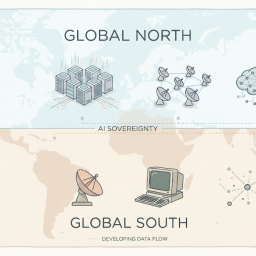
This raises a critical issue for Europe: sovereignty.
Today, many AI capabilities used in transport depend on non-European cloud infrastructures, software ecosystems and data architectures. This dependency creates strategic vulnerabilities. Transport infrastructure is not merely an economic sector; it is a critical component of national resilience. Ports, airports, railways, logistics corridors and urban mobility systems increasingly constitute digital infrastructure as much as physical infrastructure.
As a result, the deployment of AI in transport cannot be approached solely through a productivity lens. It must also be considered through the lens of technological sovereignty, cybersecurity and strategic autonomy.
Europe faces a paradox. It possesses world-class industrial transport actors, engineering expertise and regulatory influence, yet risks losing control over the software and AI layers that will govern future mobility systems. The challenge is therefore not simply to adopt AI faster, but to build sovereign AI ecosystems capable of supporting long-term industrial resilience, strengthening competitive advantage, and supporting climate transition goals.
This also explains why governance is becoming central to AI deployment in transport. AI systems influence routing decisions, infrastructure prioritization, pricing mechanisms, safety protocols and resource allocation. Poorly governed systems could reinforce territorial inequalities, create opaque decision-making structures or introduce new systemic risks.
The question is no longer whether AI should be integrated into transportation systems. The question is who designs these systems, who controls the data, and according to which governance principles they operate. This is why autonomous mobility highlights the strategic importance of sovereignty.
In this regard, transport may become one of the most strategic sectors for applied AI over the next decade. Unlike purely digital industries, transportation combines physical infrastructure, public policy, environmental transition, industrial competitiveness and national security. It therefore provides one of the clearest illustrations of how AI is reshaping not only economic performance, but also geopolitical balances.
Ultimately, the future of transport will not be determined solely by the quality of vehicles or infrastructure. It will increasingly depend on the intelligence layer capable of coordinating entire ecosystems in real time. Countries and companies capable of mastering this orchestration layer will define the next generation of mobility leadership.
“Artificial Intelligence is therefore not simply transforming transportation. It is redefining the operational architecture of modern societies themselves.”