Introduction:
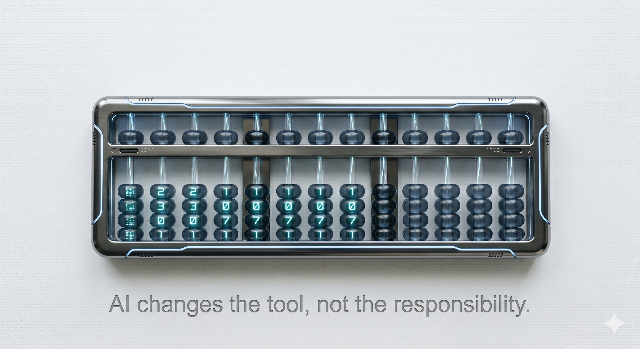
Three Revolutions of Engineering Coming from an engineering family, the contrast between generations highlights how profoundly the profession has evolved. My father and uncle, both engineers, worked in a manual reality: drawings were done by hand, calculations relied on an abacus (or at best a calculator) and designing a project required physical site visits. When I entered the profession just 15 years ago, engineering had already transitioned into a digital era. CAD software, finite-element analysis, and advanced spreadsheets transformed how projects were designed and delivered. Satellite imagery and email enabled remote collaboration, effectively globalising the industry. Today, we are entering a third transformation. Artificial intelligence is pushing engineering beyond digitisation into prediction, optimisation, and automation. Having already bridged the analogue-to-digital shift, engineers of my generation are uniquely positioned to shape what comes next[1] .
Why the AI Shift Is Different?
When computers first entered engineering offices, some believed software would substantially minimise the need for engineering expertise. Yet experienced engineers quickly discovered that a computer was only as good as the assumptions that fed into it. Incorrect loads, unrealistic boundary conditions, flawed material properties, or poor data were inevitably leading to misleading results or even dangerous outcomes. The principle that became known as “Garbage In, Garbage Out” (GIGO), remains as relevant as ever. While previous technological advances helped engineers draw faster, calculate faster or model more efficiently, artificial intelligence goes a step further: generating recommendations, designs, and seemingly complete solutions that can appear highly convincing, regardless of whether they are correct. Research on AI deployment also highlights automation bias, where users place excessive trust in machine outputs even when they are incorrect[2] . In engineering, this is particularly critical because errors translate into physical consequences, not abstract ones.
Engineers, however, carry legal, ethical, and professional responsibilities that algorithms do not. AI changes the tool, not the responsibility.
Engineering Judgement and Responsible AI
Studies from organisations such as McKinsey[3] highlight that generative AI can significantly accelerate engineering workflows, especially in documentation and early stage ideation. At the same time, productivity gains diminish in complex, judgement-intensive work, where human oversight remains essential.
AI accelerates execution; it does not replace engineering judgement. Real-world engineering reflects this reality. Airbus’s collaboration with Autodesk[4] on generative design produced the widely cited “bionic partition” for the A320 aircraft approximately 45% lighter than conventional designs while maintaining structural performance. Yet this outcome was not achieved through automation alone. Engineers defined objectives, constrained the design space, evaluated manufacturability, and ultimately decided what was acceptable. AI expanded the search space; engineers determined what mattered. Across the sector, a similar pattern is emerging[5] . Generative and parametric design tools are not replacing engineers but reshaping their role, towards higher-level decision-making: defining constraints, managing trade-offs, and governing systemwide outcomes rather than producing individual design iterations. This shift brings into focus a critical concept: responsible AI in engineering. Responsible AI is often framed in abstract terms i.e. fairness, transparency, accountability, but in engineering, it becomes tangible and non-negotiable. Infrastructure, buildings, transport systems, and energy networks do not tolerate probabilistic correctness.
A structure is either safe or it is not
Regulatory frameworks reinforce this reality. The EU AI Act (2024)[6] requires human oversight for high-risk systems, particularly those affecting safety and public safety, formalising what engineering has always required: accountability cannot be delegated to machines. In practical terms, this means AI-generated outputs cannot be treated as immutable, no matter how precise they appear. They must be tested against physics, engineering principles, regulatory requirements, and professional judgement before influencing real-world decisions.
Training Engineers for the AI Era
This is where the generational parallel becomes important. Just as previous generations of engineers taught my generation, millennials, how to use computational tools responsibly, today’s engineers carry that same responsibility forward. The risk is no longer blind trust in calculations, but blind trust in seemingly intelligent systems. Results are achieved not by AI alone, but by engineering judgement governing its use. This reality must be reflected in engineering education. As routine calculations and first-pass designs become increasingly automated, universities and professional institutions must place greater emphasis on first-principles thinking, critical evaluation, systems understanding, risk assessment, and ethics. Conclusion: Engineers as Pilots In the age of AI Co-Pilots, Engineers are not simple passengers. They are the pilots, applying judgement as an aviator relies on sight, instruments, and experience to navigate uncertainty and guide society safely toward progress. Those that will succeed are not those that adopt AI the fastest, but those that embed it most responsibly. Because in the end, technology may evolve, but responsibility remains firmly human.
Notes
[1] World Economic Forum (2023), The Future of Jobs Report 2023. Geneva.
[2] National Institute of Standards and Technology (NIST) (2023), Artificial Intelligence Risk Management Framework (AI RMF 1.0).
[3] McKinsey Global Institute (2023), The Economic Potential of Generative AI: The Next Productivity Frontier.
[4] Autodesk (2019), Airbus Uses Generative Design to Create Bionic Partition.
[5] Deloitte (2025), 2025 Engineering and Construction Industry Outlook.
[6] European Union (2024), Artificial Intelligence Act.
