
Use of AI increasingly embedded at every stage of scientific research. From hypothesis generation and literature review to code execution and manuscript drafting, no part of the research process remains outside the reach of automation.
This article asks how research integrity can hold up when AI tools and agents now do work once reserved for human researchers. The central question is not where to draw the line on AI use, but whether detection can keep pace. The hypothesis discussed here is: It cannot. The answer is not stronger detectors, but provenance1 and disclosure infrastructure: systems that record exactly how AI was involved at each stage, a foundation already taking shape.
The pace of automation is well illustrated by two systems released in the past two years. Hugging Face’s ml-intern, released in April 2026, is a research agent that autonomously navigates arXiv2, identifies relevant datasets, and runs post-training3 experiments end to end. In one reported benchmark, ml-intern raised a 1.7B model’s GPQA4 score from approximately 10% to 32%, surpassing the 22.99% recorded by Claude Code on the same task. Sakana AI’s AI-Scientist goes further, automating the entire research lifecycle from idea generation and experimentation to manuscript writing and peer evaluation, producing papers at a reported cost of roughly USD 15 each, a figure that renders per-paper production costs effectively negligible at institutional scale.
Academic publishing has long addressed AI use along two axes: disclosure obligations and the prohibition of AI authorship. The 2024 recommendation by the International Committee of Medical Journal Editors (ICMJE), which coordinates editorial standards across thousands of biomedical journals worldwide, defines two disclosure categories: use of AI for writing assistance should be described in the acknowledgments5, while use for data collection, analysis, or figure generation should be reported in the methods section. The Committee on Publication Ethics (COPE), a global forum for academic publishers and editors, has consistently maintained the same position: AI cannot be listed as an author because it cannot be held responsible for the work it produces nor hold copyright.
Yet these policies were written before AI agents became capable of conducting research autonomously. The most direct response came on October 22, 2025, when Stanford and Together AI co-hosted Agents4Science 2025, the world’s first academic workshop to formally recognise AI as a primary author. Of more than 300 submissions, 48 were accepted. One sentence from its mission statement is telling: “Existing norms incentivise researchers to conceal or minimise AI contributions.”
ICML 2026 took a similar approach, offering two LLM6 tracks: restrictive and permissive. The enforcement mechanism was not detection but an honour system, and it was promptly tested: ICML’s March 2026 statistics report 497 papers desk-rejected7, corresponding to 398 reviewers who had agreed to the no-LLM track and violated it. The conference had already conceded the limits of detection-based policing; its replacement proved no less fragile.
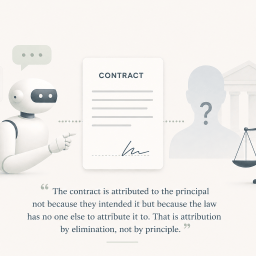
Yet the autonomous systems introduced earlier, ml-intern and AI-Scientist, do not fit neatly into either category. The work performed by AI-Scientist, generating hypotheses, writing code, running experiments, and drafting manuscripts, is neither writing assistance nor data analysis. It is the act of research itself. Existing guidelines were designed on the assumption that a human author uses a model as a tool. The scenario in which an autonomous agent operates as the principal research actor falls entirely outside that assumption.
This is not incidental but structural. Sadasivan et al. (2023) established a theoretical impossibility result: as language models improve their ability to mimic human writing, even the best possible detector is bound to perform barely better than a random classifier. OpenAI’s own AI Classifier, launched in January 2023 and quietly withdrawn six months later after achieving a true positive rate of only 26% on AI-generated text, stands as the clearest institutional admission of this limit (OpenAI, 2023).
Beyond this theoretical ceiling, the practical workarounds are straightforward: simply rewording AI-generated text (a technique known as a paraphrasing attack8) is sufficient to defeat not only text watermarking9, but also every class of AI-content detector10. Watermarks themselves can be stripped or manipulated with minimal effort.
While detection continues to fail, LLM use has already penetrated deeply into academic systems. Liang et al. (2024) estimated that between 6.5% and 16.9% of peer review text across four major AI conferences (ICLR 2024, NeurIPS 2023, CoRL 2023, and EMNLP 2023) had been substantially revised by LLMs. More notable is the finding that these rates were higher in reviews submitted shortly before the deadline, reviews reporting low confidence, and reviews that did not respond to author rebuttals. In other words, AI assistance was most prevalent precisely where human accountability was already weakest.
The failure of detection also creates a serious equity problem. Liang et al. (2023) at Stanford evaluated seven leading GPT detectors and found that they misclassified an average of 61.2% of TOEFL essays written by non-native English speakers as AI-generated. The same detectors accurately identified essays by native English-speaking students as human-written. Although this study focused on student essays, the systematic misclassification of non-native speaker texts carries a clear implication for how such tools would perform if deployed in academic publishing. Strengthening detection does not merely raise questions of accuracy; it simultaneously produces a structural equity problem.
If the answer is not detection, what is it? The academic community has already begun moving in a different direction, and that movement is proceeding simultaneously on three fronts.
The first movement begins with contributor classification standards. CRediT11 (Contributor Roles Taxonomy) defines 14 contributor roles, and as of 2024, 22.5% of original research papers have adopted the taxonomy, making it the most widely deployed contributor classification framework in academic publishing, in use across hundreds of journals spanning all major academic publishers. However, all roles were designed with human contributors in mind. Work performed by an AI agent, such as generating hypotheses or writing code, does not map cleanly onto any of them. The standard itself requires expansion.
The second front concerns content provenance standards. C2PA12 (Coalition for Content Provenance and Authenticity) is a global provenance standard with over 6,000 member organisations as of 2026. OpenAI, Google DeepMind, and Meta have committed to attaching AI-generated credentials to their outputs. Yet, as C2PA’s own designers acknowledge, the standard is structurally insufficient when used in isolation: labelling is voluntary and removable. Technical infrastructure alone is not sufficient. But without it, the work cannot even begin.
The third front operates at the level of global academic standardisation. In December 2025, the World Conference on Research Integrity Foundation, the International Science Council, COPE, STM, and the Global Young Academy launched a joint effort to develop a global reporting standard for AI use disclosure, known as the Vancouver Standard. The process is structured in three phases: mapping disclosure requirements, deriving a classification framework, and final refinement. The May 2026 Vancouver Conference marks the first public inflection point, with a complete standard expected by the end of 2026. The academic community has already begun answering the question examined in this article, not through detection but through a disclosure infrastructure. The question is no longer what the answer is, but how quickly and rigorously that infrastructure can be built.
The foregoing argument reduces to a single observation. Detection cannot answer the question that matters in the age of agents. The answer lies in recording what is already happening, and that record is now being built.
This diagnosis carries different recommendations for three groups of actors. For journals and conferences, the recommendation is to abandon detection-based gatekeeping and instead design incentive structures that reward disclosure. As the Agents4Science mission statement correctly identified, existing norms create incentives for researchers to conceal AI use. That incentive structure must be reversed. For researchers, the recommendation is to treat provenance documentation not as an uncomfortable obligation, but as an asset of their own work. Recording which tools were used at which stage is, in effect, the same act as guaranteeing the reproducibility of one’s research. For AI tool developers, the recommendation is to build usage logs and tool-call tracing as default features, not afterthoughts. Provenance is not something to be attached after the fact; it must be built into the design of the tool itself.
The penetration of AI agents into research cannot be stopped. What can be recorded, however, is how that penetration occurred. That is where our efforts must be directed, and the academic community is already moving in this direction, not as a vague promise about the future but as a reality in motion. The question that consumed us, who wrote this, has no answer left. The question that remains, what was done and by whom, already has one. We are building the record now.
References
Coalition for Content Provenance and Authenticity (C2PA) (n.d.) C2PA Specifications. Available at: https://c2pa.org (Accessed: 8 May 2026).
Committee on Publication Ethics (COPE) (n.d.) Position Statement on Authorship and AI Tools. Available at: https://publicationethics.org/cope-position-statements/ai-author (Accessed: 8 May 2026).
CRediT Contributor Roles Taxonomy (n.d.) ANSI/NISO Z39.104-2022. Available at: https://credit.niso.org (Accessed: 8 May 2026).
Hugging Face (2026) ml-intern: Autonomous ML Research Agent. Available at: https://github.com/huggingface/ml-intern (Accessed: 8 May 2026).
International Committee of Medical Journal Editors (ICMJE) (2024) Recommendations for the Conduct, Reporting, Editing, and Publication of Scholarly Work in Medical Journals. Available at: https://www.icmje.org/recommendations/ (Accessed: 8 May 2026).
International Conference on Machine Learning (ICML) (2026) ‘On Violations of LLM Review Policies’, ICML Blog, 18 March 2026. Available at: https://icml.cc/blog/on-violations-of-llm-review-policies (Accessed: 8 May 2026).
Liang, W. et al. (2023) ‘GPT Detectors Are Biased Against Non-Native English Writers’, Patterns, 4(7). Available at: https://doi.org/10.1016/j.patter.2023.100779 (Accessed: 8 May 2026).
Liang, W. et al. (2024) ‘Monitoring AI-Modified Content at Scale: A Case Study on the Impact of ChatGPT on AI Conference Peer Reviews’, arXiv:2403.07183. Available at: https://arxiv.org/abs/2403.07183 (Accessed: 8 May 2026).
OpenAI (2023) New AI Classifier for Indicating AI-Written Text. Available at: https://openai.com/blog/new-ai-classifier-for-indicating-ai-written-text (Accessed: 8 May 2026).
Sadasivan, V.S. et al. (2023) ‘Can AI-Generated Text be Reliably Detected?’, arXiv:2303.11156. Available at: https://arxiv.org/abs/2303.11156 (Accessed: 8 May 2026).
Sakana AI (2024) The AI Scientist: Towards Fully Automated Open-Ended Scientific Discovery, arXiv:2408.06292. Available at: https://github.com/SakanaAI/AI-Scientist (Accessed: 8 May 2026).
Stanford University and Together AI (2025) Agents4Science 2025: First Academic Workshop with AI as Primary Author, October 22, 2025. Available at: https://agents4science.stanford.edu (Accessed: 8 May 2026).
World Conference on Research Integrity Foundation (WCRIF), International Science Council, COPE, STM, and Global Young Academy (2025) Vancouver Standard for AI Use Disclosure. Available at: https://wcrif.org/vancouver-standard (Accessed: 8 May 2026).
Notes
1 Provenance: The technology and system for recording and tracing how digital content or research data was created, modified, and by whom.
2 arXiv: A preprint server that makes papers in physics, mathematics, computer science, and related fields freely available before formal journal publication. Researchers use it to share findings rapidly while awaiting peer review.
3 Post-training: The process of further training an AI model, already trained on large-scale data, on a specific task or objective. Also referred to as fine-tuning.
4 GPQA (Graduate-Level Google-Proof Q&A): A benchmark measuring how accurately AI systems answer graduate-level science questions. Higher scores indicate expert-level reasoning capabilities.
5 Acknowledgments: The section at the end of a paper in which authors express gratitude to institutions, funding sources, and colleagues who assisted with the research.
6 LLM (Large Language Model): AI models such as ChatGPT, Claude, and Gemini, trained on vast amounts of text data to understand and generate natural language.
7 Desk rejection: The immediate rejection of a manuscript by a journal editor, prior to external peer review, on the grounds that the submission does not meet the journal’s publication standards.
8 Paraphrasing attack: A technique for circumventing AI detectors by rewriting AI-generated text into equivalent meaning with different phrasing.
9 Watermarking: A technique that embeds statistically imperceptible patterns into AI-generated text, allowing later verification of whether content was AI-produced.
10 AI-content detectors: Tools designed to identify whether text or other content was generated by an AI system. These include zero-shot classifiers, which attempt to flag AI-generated content without having been specifically trained on it, as well as watermark-detection systems and statistical-pattern analysers.
11 CRediT (Contributor Roles Taxonomy): An international classification framework that standardises author contributions across 14 categories, including conceptualisation, data collection, and writing, to provide a transparent record of individual contributions.
12 C2PA (Coalition for Content Provenance and Authenticity): A global industry standard designed to technically verify the origin and authenticity of AI-generated images, text, and video. Participants include Adobe, Microsoft, Google, and OpenAI.