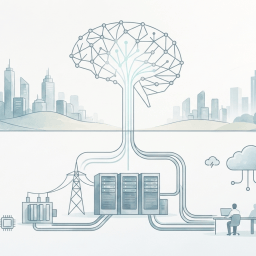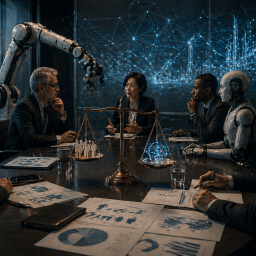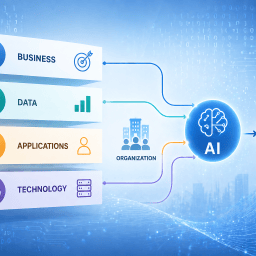

The transition from Artificial Intelligence (AI) to Superintelligence (SI) – driven by competition over computing power and the pursuit of technological sovereignty -will profoundly reshape global power dynamics and intensify strategic rivalries. This shift will introduce unprecedented ethical and legal challenges while redefining the balance of power structured around new geostrategic interests. By transforming hard, soft, and smart power, SI will fundamentally alter warfare across physical and cyber domains, underscoring the urgent strategic foresight and anticipatory governance.
- Transition from Artificial Intelligence to Superintelligence:
Artificial Intelligence (AI) is profoundly transforming all sectors, spanning contemporary political, economic, social, and cultural spheres. This shift reshapes democratic processes, electoral dynamics, scientific fields, geopolitics, and human interaction- both inter-human and human-machine. Beyond the domestic arena, AI is redefining international relations by increasingly mediating decision-making through complex interactions between human actors and algorithmic systems.
This transformation will be amplified with the advent of Superintelligence (SI), defined as an AI system that exceeds human cognitive performance across all relevant domains, including reasoning, strategic planning, social cognition, and moral judgment. Grounded in the concept of artificial general intelligence, SI is conceptualized by Nick Bostrom as “intellects that greatly outperform the best current human minds across many very general cognitive domains”. Consequently, contemporary scholarly and policy debates increasingly frame SI development as a strategic endeavor, wherein great powers compete for technological sovereignty. Such advancements directly implicate fundamental principles enshrined in international law and embedded within core theories of international relations.
The transition from artificial intelligence to superintelligence represents a continuous technological revolution operating across three distinct levels: the evolving interactions between AI, human agents, machines, and the environment. The increasing AI autonomy and self-governance of algorithmic systems. The exponential growth in computational and cognitive power.
While SI promises substantial benefits, it simultaneously exacerbates ethical, legal, and political challenges. Ethically, the paramount challenge lies in the erosion of meaningful human control. Safeguarding human rights and dignity requires robust oversight and a new conception of AI governance that ensures consequential algorithmic decisions remain both intelligible and contestable by human subjects.
From a legal perspective, existing laws provide important protections, but SI will amplify concerns related to legal personality, and current legal frameworks must also be updated, as current regulatory approaches offer a foundation rather than a complete answer. For example, the European Union’s AI Act uses a risk-based approach, with stricter obligations for certain high-risk systems, while the Council of Europe’s Frameworks use a rule of law and human rights approach.
Frameworks such as the G20 (2019), the OECD (2019), and the UNESCO (2021) illustrate how laws can regulate AI advances. However, these instruments do not explicitly address the ethical and political implications of superintelligence. Furthermore, AI ethics are essential, but insufficient. The insufficiency of AI ethics becomes a matter of life and death when it comes to the weaponization of SI, as AI are used in several forms of warfare. Consequently, SI requires rethinking existing legal frameworks and more flexible procedures for amending laws.
From a political perspective, SI could raise the gap between countries, particularly between the Global North and global south, as AI development could concentrate economic and political influence among a small number of companies or states that control computing infrastructure, data, investment, and technical expertise. This raises questions related to global governance and rules, whose interests those rules protect, and whether less-resourced countries and communities can meaningfully participate in decisions. Governance itself will be insufficient, as SI will increase the need of anticipatory and predictive governance.
- Superintelligence and the need for anticipatory governance:
Predictive and anticipatory global governance grounded in proactive normative innovation is therefore not optional but essential to preserving human autonomy in the era of Superintelligence. However, the global debate on such advances is characterized by a significant conceptual vacuum and the total absence of a common understanding and a common consensus on what AI governance entails and the more on an anticipatory and predictive governance. While states from the global north and the global south are racing for AI national strategies and regulations as they are racing for investment on AI, should assess future scenarios, identify potential risks and threats to national and international security before they occur, and establish adaptable safeguards. This includes ongoing evaluation, clear human oversight, and instruments to update rules as technologies change. Such predictive and anticipatory governance should be based on flexible procedures for amending laws and anticipatory policy actions without treating superintelligence as inevitable. Considering SI’s tangible and intangible implications for the emerging “neuro-rights,” including cognitive liberty and neuro-privacy, cannot be delegated solely to market actors. The expanding capacity of advanced AI systems to influence, monitor, and potentially manipulate cognitive processes underscores the urgency of developing new international legal instruments tailored to this next generation of human rights. Proactive normative innovation is therefore not optional but essential to preserving human autonomy in the ASI era.
Ultimately, this anticipatory and predictive governance should be grounded on the supremacy of law and the power of sovereign states which should be protected from the increasing power of big tech compagnies which hold the submarine cable sovereignty.
References:
Bostrom, N. (2014). Superintelligence: Paths, dangers, strategies. Oxford University Press.https://link.springer.com/article/10.1007/s11023-015-9377-7
European Union. (2024). Regulation (EU) 2024/… laying down harmonized rules on artificial intelligence (Artificial Intelligence Act). Official Journal of the European Union. https://eur-lex.europa.eu/eli/reg/2024/1689/oj/eng
Council of Europe. (2024). Framework Convention on Artificial Intelligence and Human Rights, Democracy and the Rule of Law. Council of Europe. https://www.coe.int/en/web/artificial-intelligence/the-framework-convention-on-artificial-intelligence
G20. (2019). G20 Ministerial Statement on Trade and Digital Economy. Tsubuka, Ibaraki, Japan, June 9, 2019. https://www.g20.utoronto.ca/2019/2019-g20-trade.html OECD. (2019). OECD principles on artificial intelligence. OECD Publishing. https://doi.org/10.1787/1cd40c44-en
Rayhan, S. (2023). AI superintelligence and human existence: A comprehensive analysis of ethical, societal, and security implications. https://doi.org/10.13140/RG.2.2.12922.26561
UNESCO. (2021). Recommendation on the ethics of artificial intelligence. United Nations Educational, Scientific and Cultural Organization. https://unesdoc.unesco.org